

2026 February Community Meeting
As part of our February community meeting, we were delighted to welcome Emma McInnes as our guest speaker. Emma brought a fresh perspective from outside the academic/behaviour analytic sphere, yet her work addresses many of the challenges we're passionate about, from climate change and community building to civic engagement and environmental stewardship.
Emma was recently elected as a local board member in Aotearoa New Zealand and is co-founder of Women in Urbanism Aotearoa. Her work focuses on designing fair and equitable cities and towns that serve the needs of all community members, including women, women of colour, new New Zealanders, wahine Māori (Indigenous women), people with disabilities, the elderly, and children.
Image from our BASS slide deck - Introducing Emma McInnes
As established in our meeting, meaningful change needs to happen at multiple levels. Much of Emma's work operates at the systems and community level.
Systems-level change
Emma's involvement in local government functions as a systems-level intervention. She meets and listens to community members to understand their priorities and barriers, then works to ensure these are reflected in governance decisions, for instance, where funding is allocated and what gets prioritised.
Currently, there is an urgent focus on ensuring that our city is equip with flood-resilient infrastructure following recent extreme weather events and landslides (which according to climate science professor, is unfortunately a ‘peek into the future’).
Emma advocacy through Women in Urbanism Aotearoa also exemplifies systems change. The team aims to foster a community of women working or studying in urban fields, as well as anyone interested in urban issues. Members are supported to gather through online spaces, casual cafe meetups, and local events.
The group also recognised that transport and urban planning events predominantly feature male speakers, their team then created a catalogue of women speakers, their area of expertise and contact details, a perfect example of reducing response effort to increase desired behaviour (inviting diverse speakers).
The Hammarby Case Study
Hammarby (Stockholm) was a neighbourhood case study Emma drew on that illustrated how environmental design can serve as a powerful antecedent intervention to shape behaviour at scale.
The physical environment in Hammarby creates establishing operations that make sustainable, community-oriented behaviours more likely:
Dense but beautiful homes with lots of green spaces and shared backyards
Sustainable transport infrastructure that makes walking, cycling, and public transit the path of least resistance
Passive surveillance through well-lit spaces and "eyes on the street", here the built environment establishes motivating operations for outdoor activity, which —> naturally increases community monitoring and safety
Shared gardens that prompt social interaction, encouraging residents to get to know their neighbours
The neighbourhood includes a host of amenities within walking distance (e.g., cafes, medical facilities, schools, preschools, a library, sports and youth centre). Children can reach school crossing minimal car-trafficked streets. This design creates natural contingencies that reinforce active transport and reduce car dependency.
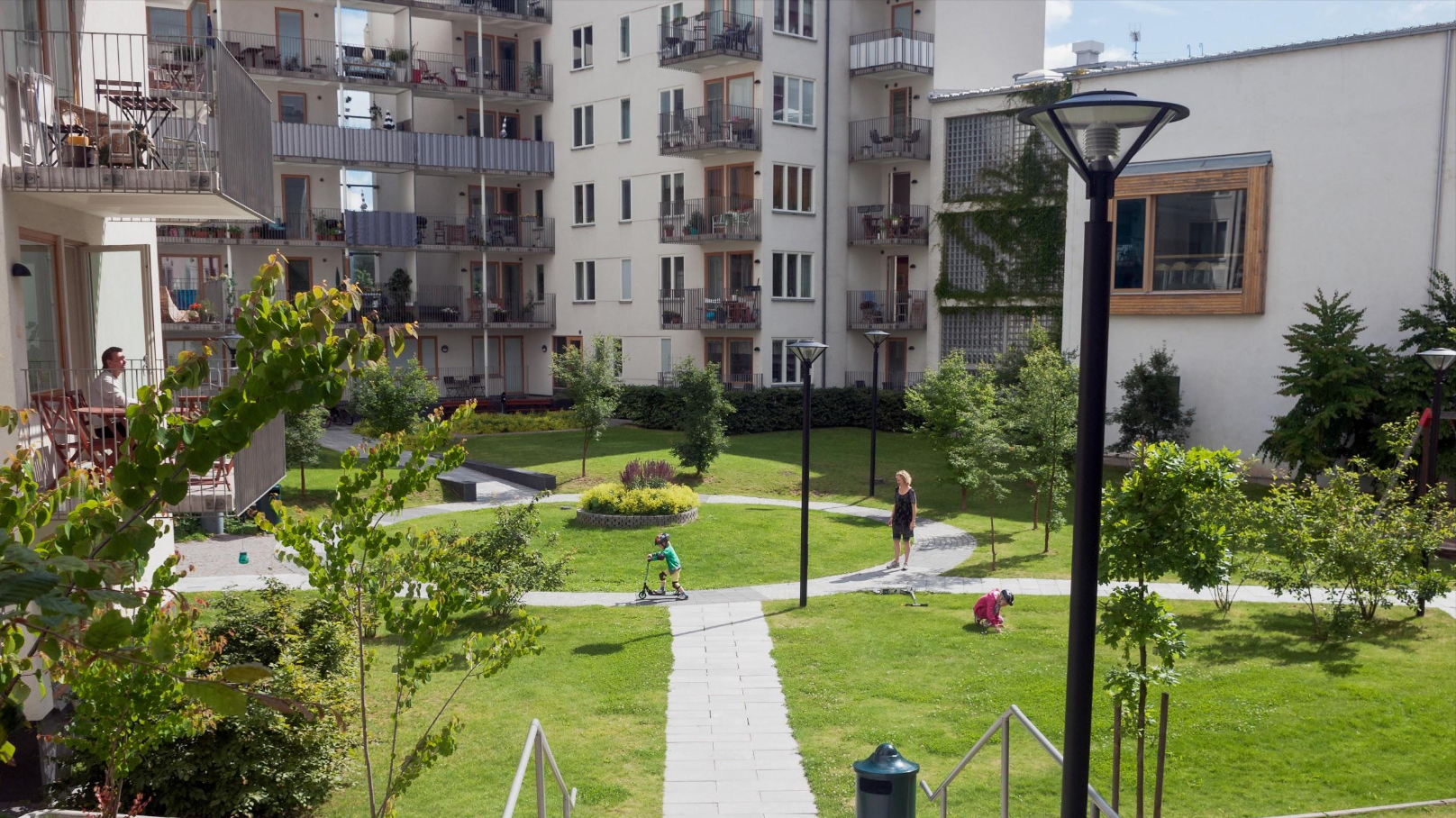
Images from Emma’s slide deck - Hammarby, Stockholm.
Apartment complex with closely spaced buildings. On the left, a man sits on his balcony in the afternoon sun. In the center, a lush green garden opens onto a paved path where one child rides a scooter and another child crouches on the grass. A caregiver stands nearby watching the children. The area is well lit and feels open and spacious.
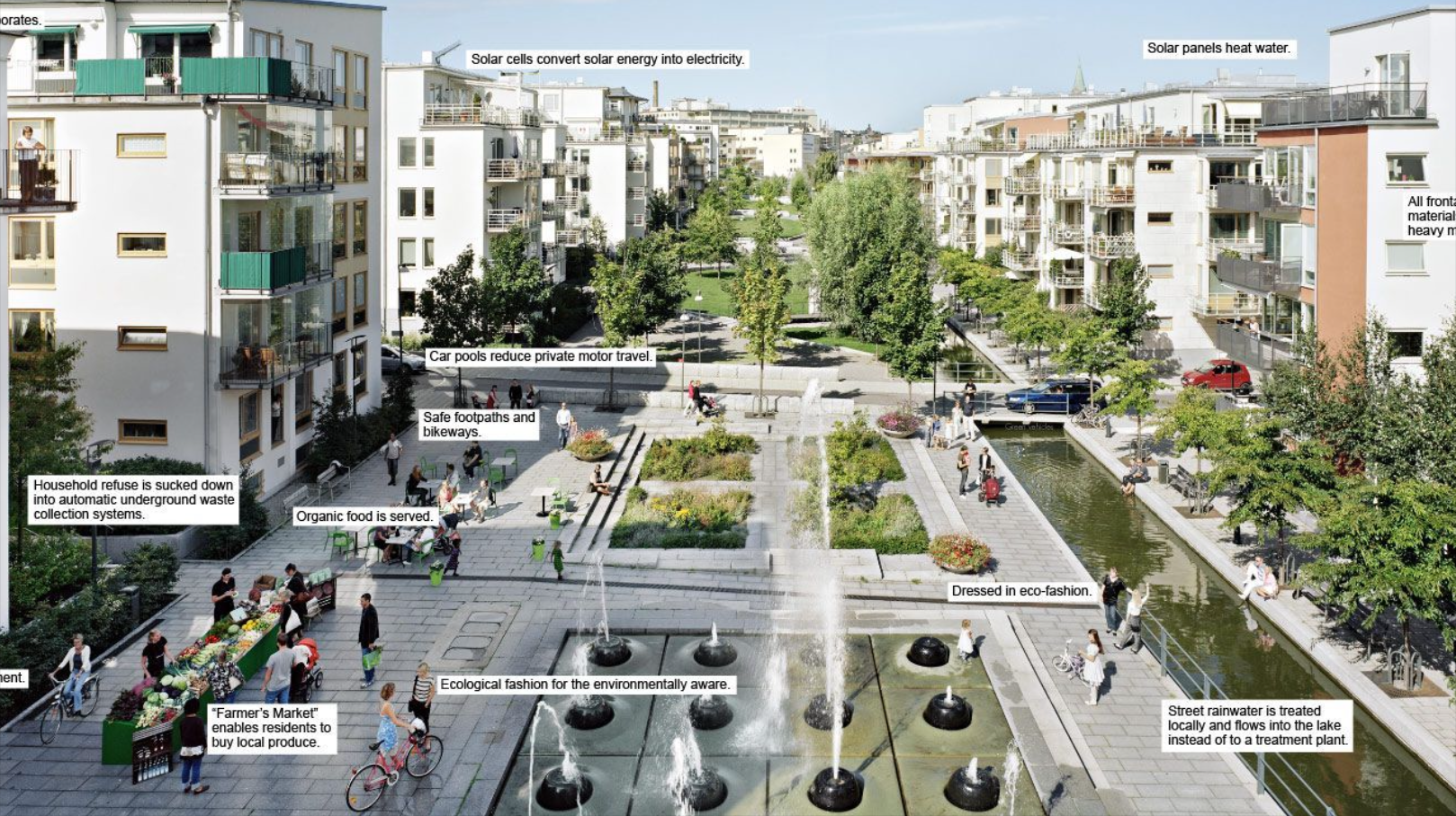
Images from Emma’s slide deck - Hammarby, Stockholm
An overview of the Hammarby community: low-rise buildings (about four stories) line both sides. Between the buildings are large open spaces divided by trees and water features. A wide paved path runs through the area with ample room for outdoor seating; people are seated on the path, having dinner and sharing food. Other pedestrians walk along the footpath; some people lean on railings beside the water. Trees provide shaded areas. Two cars are parked nearby.
Hammarby also incorporates gender-sensitive architecture that addresses the different contingencies women face in urban spaces:
Overhanging balconies allow passive supervision of children playing outside (mothers identified this feature as an important enabler of outdoor play)
Minimal dark, isolated spaces as these are associated with safety concerns
Level boarding (platform height matches vehicle floor) on light rail vehicles allowing easy pram, or mobility device access
Collectively, the presence of these environmental arrangements functions as ‘setting events’ that increase the probability of active lifestyles. When infrastructure supports cycling, walking, and outdoor activity, these behaviours naturally occur at higher rates, and enabling further access to other reinforcers (i.e., health benefits, social connection, environmental sustainability). Hello behavioural cusps!
Living ‘sustainability’ in Hammarby became the default modality.
Being an urban designer is like being a detective 🕵🏻♀️
Emma talked about being a firm believer in good graphic design, she demonstrated this beautifully by illustrating directly on photographs to show how cities could better serve their people. In our session, she talked about how being an urban designer is a bit like being a detective, through careful observation, you can see the breadcrumbs of how people actually interact with and use spaces. From these observations, urban designers can more intentionally make adjustments to cities. After all, cities are meant to serve their people right?
Consider this example: grass worn away on curbsides where restaurant visitors create their own path rather than walking 5-10 meters to the pedestrian crossing. Emma illustrated how a footpath could be added to accommodate this natural pattern of behaviour. These "desire paths" reveal the actual contingencies controlling pedestrian behaviour (the most direct route to the restaurant is more reinforcing than following the designated pathway that is further away). It's a natural functional assessment of sorts, where the environment itself shows us what variables are really controlling behaviour. Rather than fight against how people naturally move, her approach strives to build infrastructure that align with existing patterns.
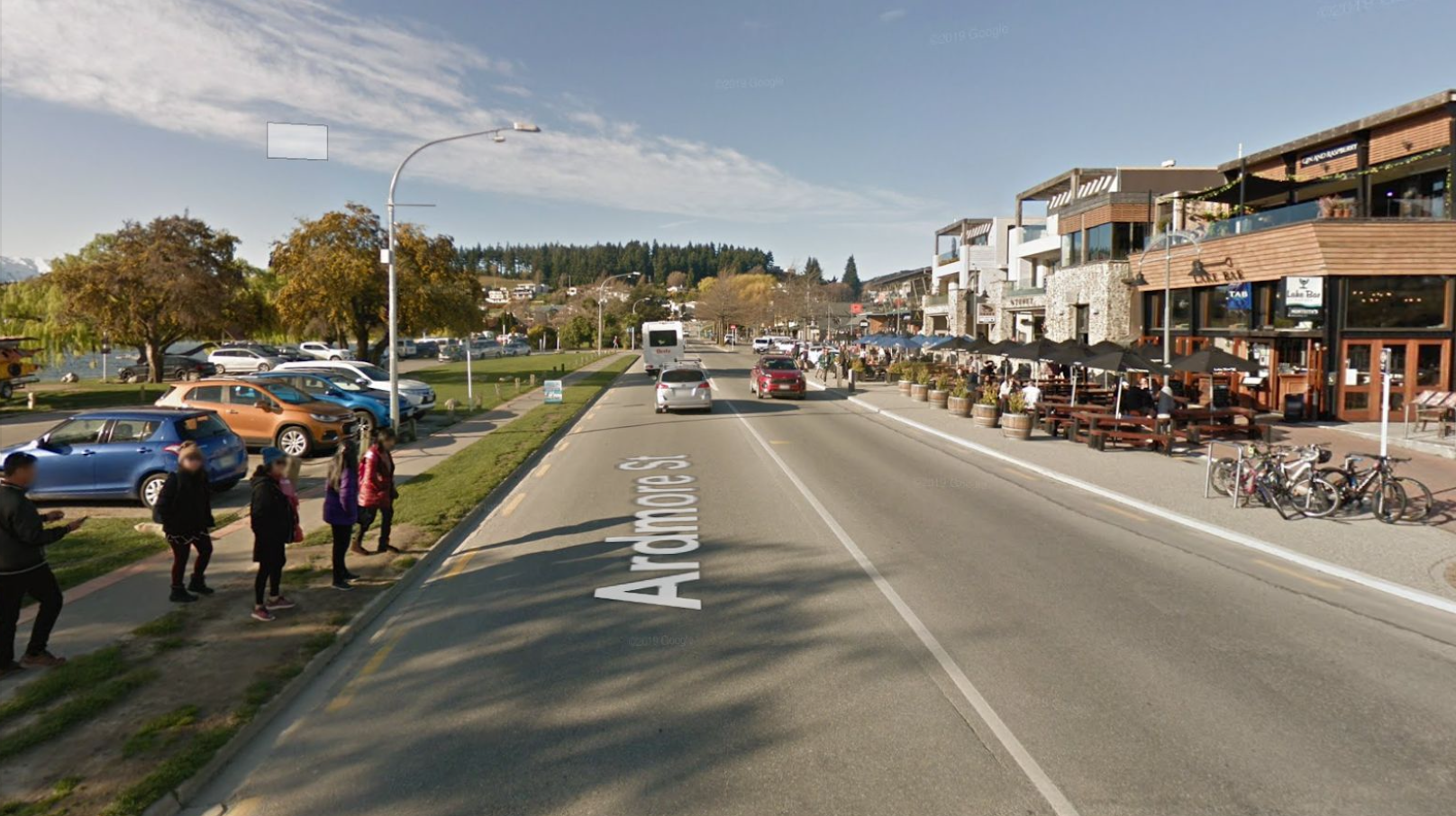
Images from Emma’s slide deck - An screenshot from Google maps in a New Zealand town
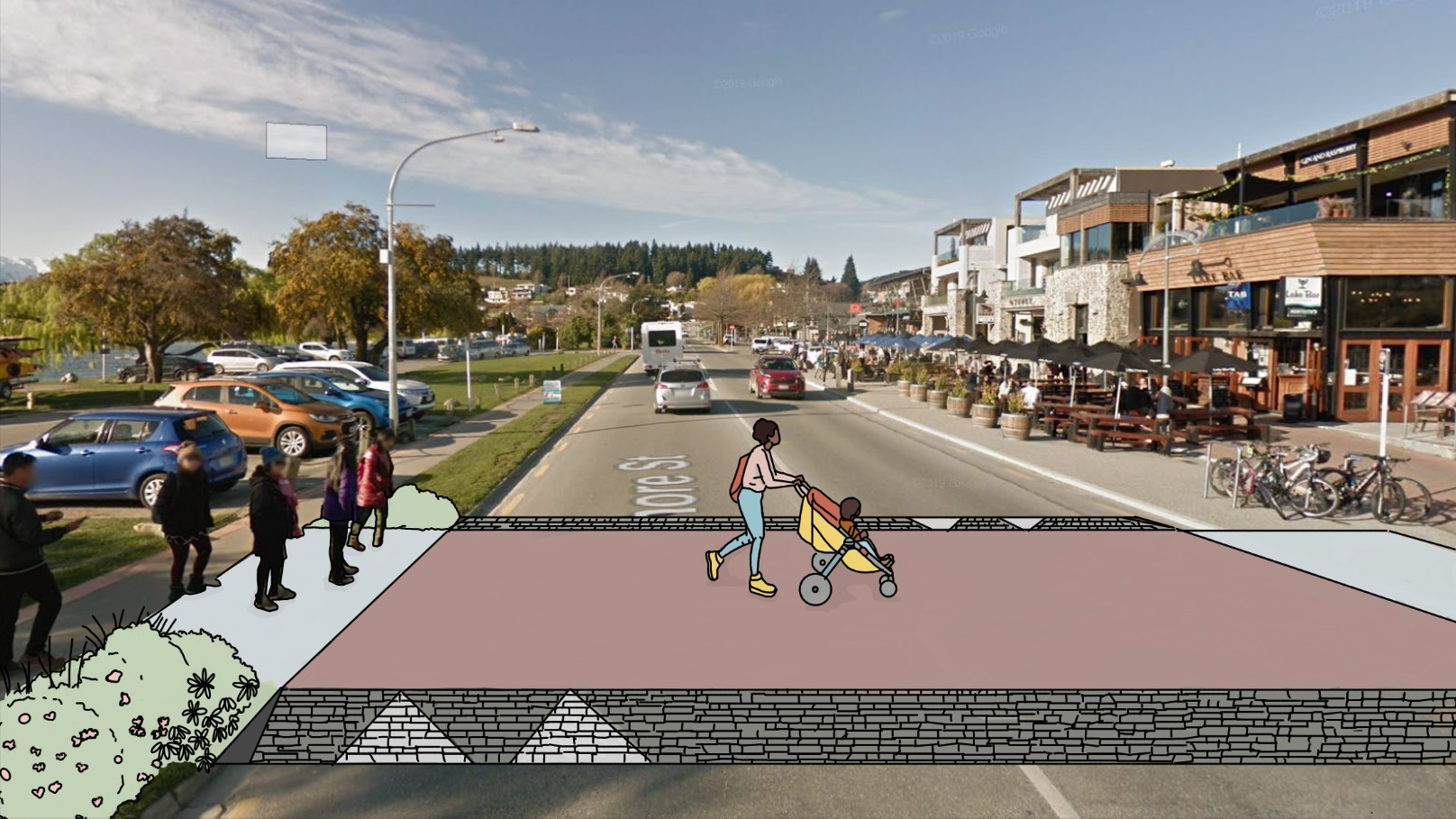
Images from Emma’s slide deck - An screenshot from Google maps in a New Zealand town, plus illustration on top
Community-level change: Waterview Community Hub
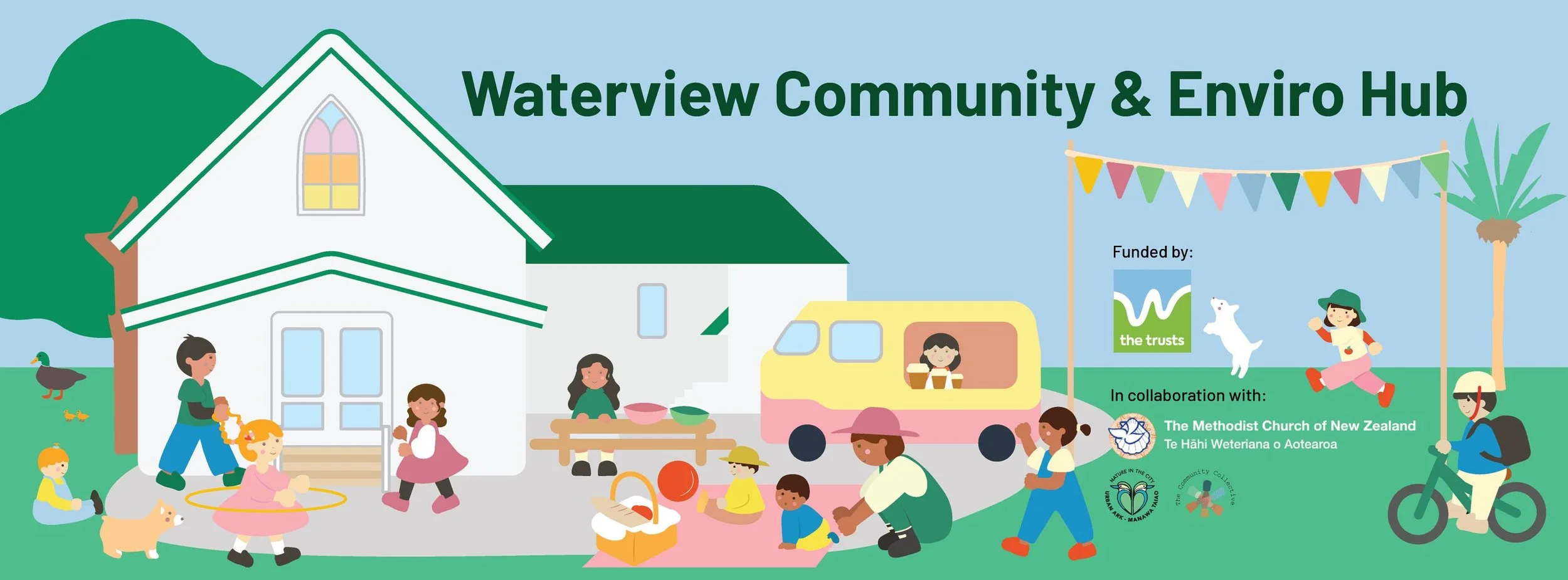
Image from Waterview Community Hub’s Facebook group
An illustration of the Waterview Community Hub. The church sits in the background, its steeple visible above the roofline of the hub. In the foreground, a grassy lawn spreads out from the building. A group of children enjoy the lawn: toddlers on picnic mats accompanied by a caregiver; other children ride small bikes, run after a puppy, or throw a ball while engaged in independent play. The scene conveys a safe, welcoming community space with relaxed supervision and active play.
On a more localised scale, Emma champions the Waterview Community Hub as a mechanism for building community connection. The hub is set in an under-utilised church space for weekday community use, hosting BBQ nights, family disco nights, and cultural events.
From a behavioural perspective, these events function as:
Structured opportunities for reinforcement of social connection
‘Shaping’ procedures for community engagement (starting with low-barrier events)
Within one year, residents reported shifts in safety, trust, and connection, demonstrating how arranging effective contingencies at the community level can produce meaningful transformation.
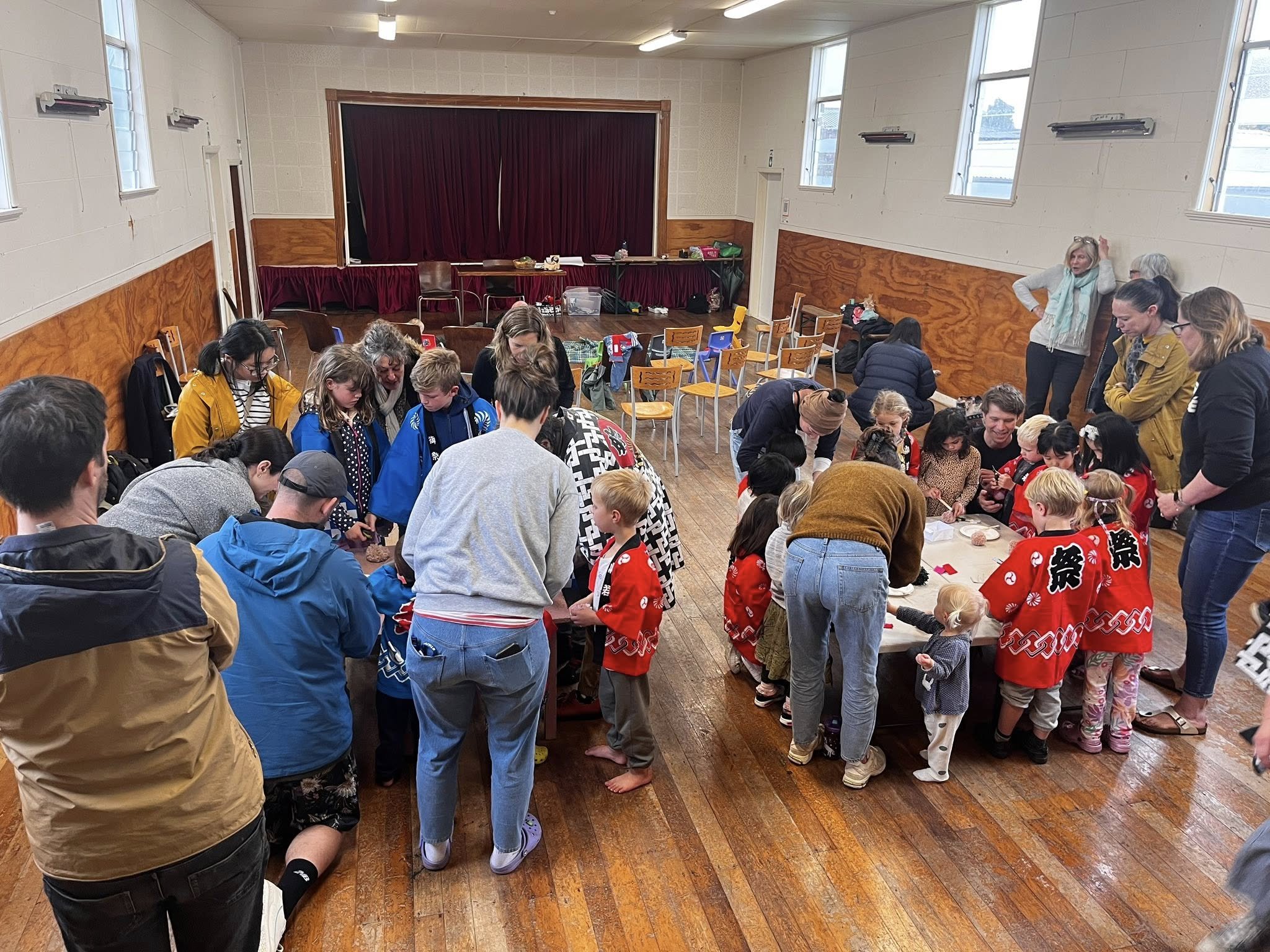
Image from Waterview Community Hub’s Facebook group - a Japanese Moon Festival Workshop:
Inside the hub, two clusters of adults and children participate in Moon Festival activities; most of the children are in red Japanese outerwear. There are adults on the fringes watching and chatting.
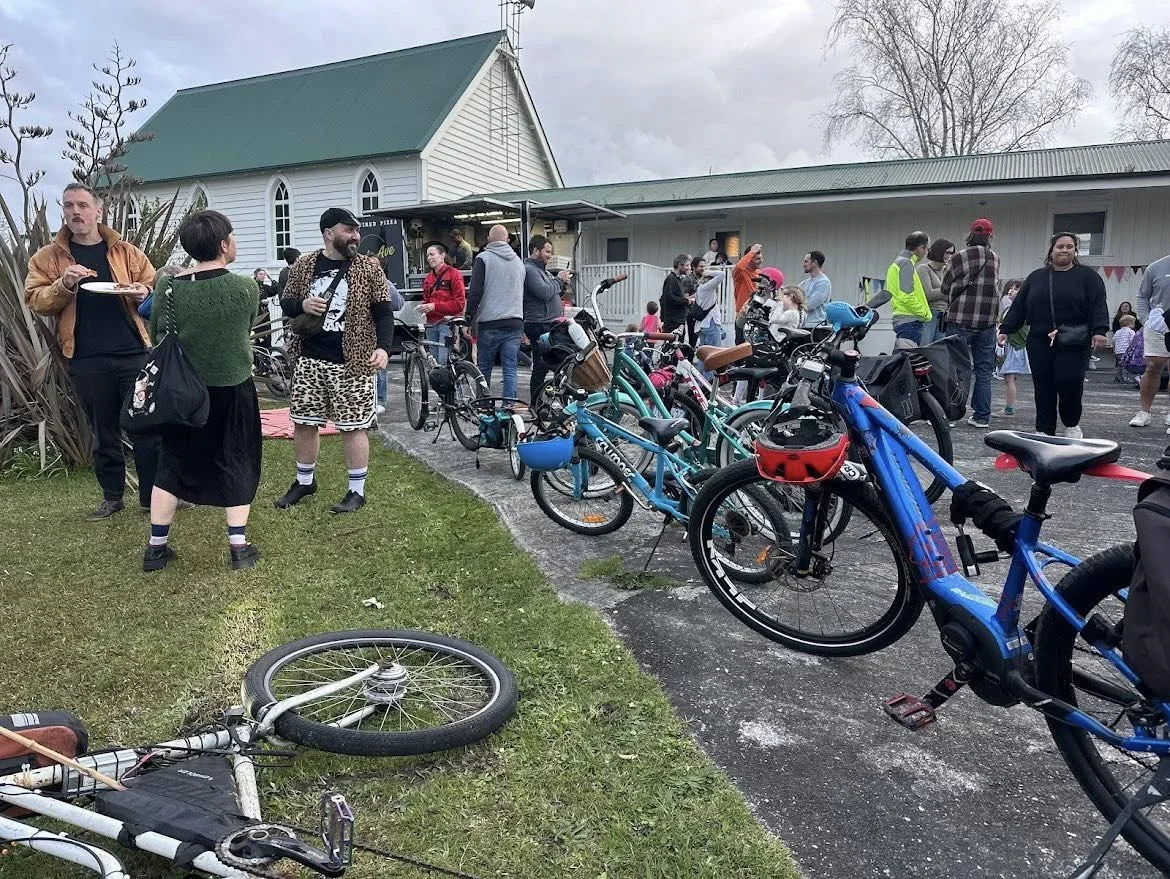
Image from Waterview Community Hub’s Facebook group - a Bike Disco at the Hub:
Many adults and children are gathered outside the hub, most holding plates of food and eating dinner they bought from nearby food trucks (not visible in the image). Numerous bicycles are parked on the pavement nearby, and one bike lies on the grass. The bikes were likely ridden by local residents who came to attend the event.
Our takeaways:
Environmental design is antecedent intervention at scale: urban planning shapes the contingencies millions of people encounter daily
Reducing response effort works: whether it's making accessible speaker catalogues or level-boarding trains, making desired behaviours easier increases their occurrence
Passive surveillance as a natural contingency: well and intentionally designed spaces create automatic monitoring without additional intervention
Systems change requires different tools: creating lasting change may require engaging with policy, local infrastructure… and in this case, a thoughtful urban planner!
As we continue our work in sustainability, community building, and social change, Emma's insights remind us to think beyond the individual and consider how we might shape the environments, systems, and policies that influence behaviour on a broader scale.